

Marcus Bell, Staff Writer.
There is a bottle of setting spray sitting on almost every bathroom shelf in America, half used, cap slightly sticky, bought after a wedding or a humid August that ruined a full face of makeup by noon. Most women do not throw it out. They just stop trusting it, and start wondering if the problem was ever the product at all.
It usually was not. A 2021 study in the Journal of Cosmetic Science measured how differently the same setting mist performed depending on spray distance and drying time, and found the variation in wear time was larger than the variation between formulas. In plain terms: technique moved the needle more than the bottle did.
This guide is not about buying anything new. It is about using what is already sitting on your shelf correctly, so the fifteen dollars you already spent finally does the job it promised.
- Distance decides everything: holding the bottle six to eight inches from the face lets the mist land as a fine, even veil instead of wet droplets that smear makeup underneath.
- Timing beats product: the same spray applied before powder behaves differently than one applied after everything is set, and sequence matters more than price point.
- Climate changes the method: humid air and dry, heated indoor air each demand a different drying window, and skipping that wait is the most common reason a spray fails.
Why Your Spray Evaporates Before It Can Work
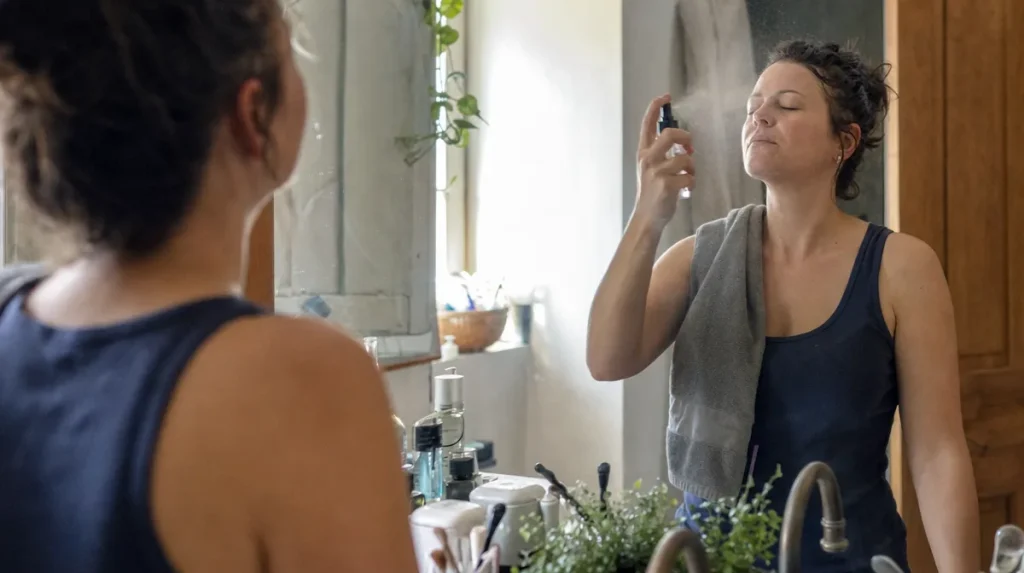
Setting spray works by suspending a very thin film-forming ingredient, often a polymer or a light acrylate, in a carrier that is mostly water or alcohol. The carrier has one job: evaporate. The film has the other job: stay behind and hold your makeup in place, the way a thin coat of varnish holds down wood grain without changing its color.
The trouble is that most people spray too close, too much, or both, which floods the skin with carrier before the film has any chance to settle evenly. Think of it like watering a seedling with a fire hose instead of a watering can. The seedling does not grow faster. It drowns.
A quick self-test: spray once onto the back of your hand from eight inches away and watch how it dries. If it beads and runs, your technique on your face is likely doing the same thing, just hidden under powder.
Finding The Right Distance And Angle
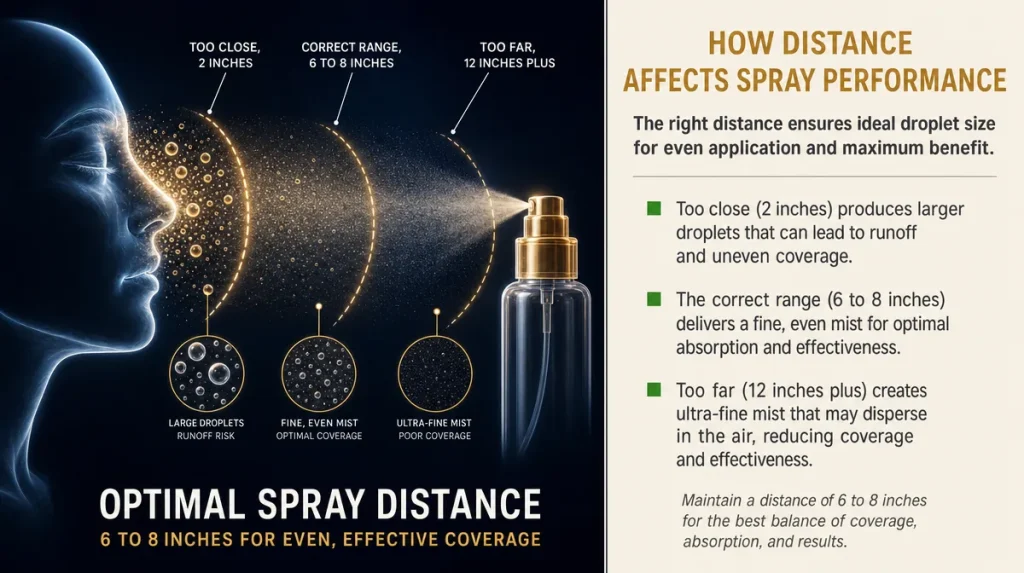
Hold the bottle six to eight inches from your face, roughly the length of a dollar bill held end to end. Spray in a loose X or T pattern rather than aiming directly at one spot, which keeps any single area from getting oversaturated.
Close your eyes and keep your mouth relaxed, not pursed, since a tensed face creases unevenly once the film dries. Two to three passes is plenty for most finishes; more than that just adds drying time without adding hold.
The common mistake is spraying in short, close bursts aimed at the T-zone, the same place that already has the most oil. That concentrates product exactly where it is least needed and skips the cheeks and jawline, which are usually the first places makeup actually moves.
Where Setting Spray Belongs In Your Routine
Setting spray is not a single step, it is two different steps that happen to use the same bottle. A light mist before foundation, sometimes called priming, helps blend cream and liquid products into the skin rather than sitting on top of it. A second, fuller mist after powder is what locks the whole look in place.
Skipping the first mist is rarely a problem. Skipping the second one, or rushing it, is where most wear time is lost. Dermatology guidance from the American Academy of Dermatology on general skincare layering notes that products need a brief interval to settle before the next step is applied, and the same logic applies here: powder needs a minute to bind before spray locks it, not the other way around immediately.
A reasonable order for most routines is: cream products, a light optional mist, powder where needed, a sixty-second pause, then the final locking mist.
The Mistakes Everyone Makes With The Bottle
The most common error is fanning the spray in big sweeping arcs from a foot away, which looks thorough but actually deposits almost nothing evenly. The mist disperses into the air before it reaches the skin in any meaningful concentration.
The second error is touching the face immediately after spraying, patting it with a makeup sponge to “help it dry.” This disturbs the film while it is still wet and can drag pigment, undoing the very hold the spray was meant to create.
The third is storing the bottle somewhere hot, like a car dashboard or a sunny windowsill, which can destabilize the propellant or alcohol content over time and change how finely the product atomizes. A bottle that once sprayed a fine mist and now sprays in heavy drops has likely been affected this way, not gone bad in the sense of expiring.
A simple fix for all three: spray, then walk away. Let gravity and air do the work for a full sixty seconds before touching your face again.
Reading Your Climate Before You Mist
The same spray behaves differently in a humid New York August than it does in a dry, heated apartment in January, and the method should change with it.
In humid conditions, the air is already saturated with moisture, so the water or alcohol in the spray evaporates more slowly. Applying a second coat too soon just adds more liquid on top of liquid that has not finished drying, which can make makeup slip rather than set. A 2019 study in the International Journal of Cosmetic Science tracked makeup wear across humidity levels and found that drying time nearly doubled above 70 percent relative humidity, which is a fair description of an East Coast summer afternoon.
In dry winter air, especially with indoor heating running, the spray evaporates almost immediately, which can tempt people into overspraying to compensate for a finish that already feels dry to the touch. That instinct usually backfires, since more product does not add moisture back to skin that is dehydrated by the heating itself, it just adds more film.
The practical rule: in humidity, wait longer between coats. In dry heat, use less product and consider a hydrating mist underneath rather than more setting spray on top.
Layering Spray With Powder Without Undoing Either
Powder and spray are not competing products, they are two different holding mechanisms, the way a belt and suspenders both keep trousers up without doing the same job. Powder absorbs oil and diffuses shine. Spray creates a flexible film over the top. Used together correctly, each reinforces the other.
The mistake is applying a heavy final spray directly over a heavy final powder, close up, in one wet pass. This can reactivate the powder’s pigment and create patchiness, particularly around the nose and chin where powder tends to sit thicker.
A better approach is to apply powder only where needed, rather than all over, then mist from the recommended distance in light passes, letting each pass dry slightly before the next. If a finish still looks cakey afterward, the powder was likely applied too heavily to begin with, not that the spray failed to blend it.
A fast self-test: press a clean tissue lightly against your cheek after the full routine dries. Faint color transfer is normal. Visible powder flaking off suggests the powder step needs lightening next time, regardless of which spray follows it.
Judging Results And Knowing When To Reapply
A setting spray that is working should not be judged by how your face feels right after application, since almost every formula feels slightly tacky or damp for the first few minutes. The real test is how your base looks four to six hours later, which is roughly the point where oil production and daily movement start to challenge any finish.
If foundation has visibly separated around the nose or faded entirely from the forehead by that point, the spray is not the first place to look. Oil-prone skin may simply need a blotting step mid-day rather than another full misting, since spraying over oil without blotting first just suspends the film on top of a slick surface.
Reapplying setting spray midday is rarely useful once makeup has already broken down, since the film has nothing stable to adhere to anymore. A light facial mist for comfort is fine at that point, but it will not restore hold. That requires going back to powder, or in some cases a partial touch-up, before any spray is reapplied.
What Actually Matters Versus What Is On The Label
Marketing language on setting spray bottles tends to lean on words like “24-hour wear” or “weightless,” which describe a best-case scenario under controlled conditions, not a guarantee under a humid commute or a dry office. The Good Housekeeping Institute’s lab testing approach to wear-time claims generally measures performance under set conditions, which is a useful reminder that your bathroom is not a lab, and your day is not controlled.
What matters more than any claim on the bottle is the finish type, matte versus dewy, since that tells you how the film is designed to sit. A dewy-finish spray left on a very oily T-zone will visibly break down faster, not because it is a worse product, but because its design assumes a drier surface to begin with.
Alcohol content is worth a glance for sensitive or dry skin, since a formula leaning heavily on denatured alcohol dries faster but may also feel tight on already dehydrated skin, particularly in winter. None of this means a cheaper drugstore spray performs worse than a pricier one bought at Sephora or Ulta Beauty. Formulation science in this category is mature enough that the gap between a $9.99 drugstore holy grail and a $34 specialty bottle is often smaller than technique alone can close.
Key Takeaways
Setting spray fails more often from technique than from formula. The fixes below cost nothing and work with whatever bottle is already on your shelf.
- Hold the bottle six to eight inches away and spray in a loose X or T pattern, not short bursts at the T-zone.
- Use a light mist before foundation if you want a priming effect, and a fuller mist after powder to lock the look in place.
- Wait at least sixty seconds after spraying before touching your face.
- In humid weather, wait longer between any additional coats. In dry, heated winter air, use less product rather than more.
- Apply powder only where you genuinely need it, so the final mist does not have to fight a heavy layer underneath.
- Judge a spray by how your base looks four to six hours later, not by how it feels in the first few minutes.
- Store the bottle away from heat and direct sun to keep the spray pattern fine rather than heavy.
This article is for general information and does not replace personalized advice from a dermatologist.
Individual results vary depending on skin type and environment.